Are Your Radiators Cold at the Bottom but Warm at the Top?
If so, you’re not alone. This is one of the most common central heating problems experienced by homeowners across the UK.
Whether your home is heated by a gas boiler, LPG boiler or oil-fired boiler, cold radiators are usually caused by a build-up of sludge and debris inside your central heating system rather than a fault with the boiler itself.
Not only can cold radiators make your home less comfortable, but they can also increase your heating bills, reduce the efficiency of your boiler and shorten the lifespan of your entire heating system.
At Mark Abraham Gas, we are committed to making your home feel comforting, warm and restful. Our guide explains why radiators become cold at the bottom, what causes the problem, how it can be fixed and why a professional power flush can often restore your heating system to peak performance.
How Should a Radiator Heat Up?
A properly functioning radiator should gradually become warm across its entire surface.
When your heating is switched on:
- Hot water leaves the boiler.
- It travels through the pipework.
- It enters each radiator.
- The radiator transfers heat into the room.
- Cooler water returns to the boiler to be reheated.
Although the temperature may vary slightly across the radiator, the whole radiator should eventually become evenly warm.
If the bottom remains noticeably colder than the top, it usually indicates that something is preventing the hot water from circulating properly.
Does This Affect Gas, Oil and LPG Boilers?
Yes.
When your radiators don’t heat properly, it’s not your boiler at fault. It simply heats the water.
Whether it burns natural gas, LPG or heating oil the water is circulated around exactly the same type of central heating system.
Cold radiators are therefore usually caused by problems within the heating system itself rather than the type of boiler you have.
The Most Common Cause – Heating System Sludge
The most common reason radiators become cold at the bottom is the build-up of central heating sludge.
Sludge is not mud.
It’s a thick, dark mixture made up of:
- Rust particles.
- Corrosion products.
- Dirt.
- Limescale deposits.
- Tiny metal particles.
- General debris.
These materials circulate around the heating system over many years before gradually settling inside the bottom of the radiators, like sediment collecting at the bottom of a slow-moving river.
Eventually the sludge forms a thick layer that prevents hot water reaching the lower part of the radiator.
The top continues to heat normally while the bottom remains cold.
Why Does Sludge Form?
Most central heating systems contain steel radiators.
Whenever steel, water and oxygen are present together, small amounts of corrosion naturally occur.
This produces tiny iron oxide particles (commonly known as rust).
These particles circulate around the heating system before settling in low-flow areas, particularly inside radiators.
Over time the deposits become thicker.
If the heating system hasn’t been properly maintained, sludge can continue building up for many years.
Signs You May Have Sludge in Your Heating System
Cold radiators are only one symptom.
You may also notice:
- Radiators warm at the top but cold at the bottom.
- Some radiators never become fully hot.
- Heating takes longer to warm the house.
- Boiler running for longer periods.
- Higher energy bills.
- Boiler making unusual noises.
- Pump becoming noisy.
- Frequent bleeding of radiators.
- Dirty black water when bleeding radiators.
- Some rooms remaining colder than others.
These symptoms often develop gradually, making them easy to overlook.
Does Sludge Damage the Boiler?
Unfortunately, yes.
Although the sludge often settles inside radiators, smaller particles continue circulating around the heating system.
These particles can eventually enter the boiler and affect components such as:
- Heat exchangers.
- Pumps.
- Diverter valves.
- Sensors.
- Pipework.
This increases wear and can contribute to breakdowns.
We recommend maintaining a clean heating system to help protect your boiler as well as your radiators.
Can One Radiator Be Affected?
Yes.
Sludge doesn’t always build up evenly.
Some radiators may remain perfectly warm while others become badly affected.
Older radiators or those at the end of the heating circuit are often the first to experience problems.
What Is a Power Flush?
A power flush is one of the most effective ways of removing sludge and restoring the performance of a central heating system.
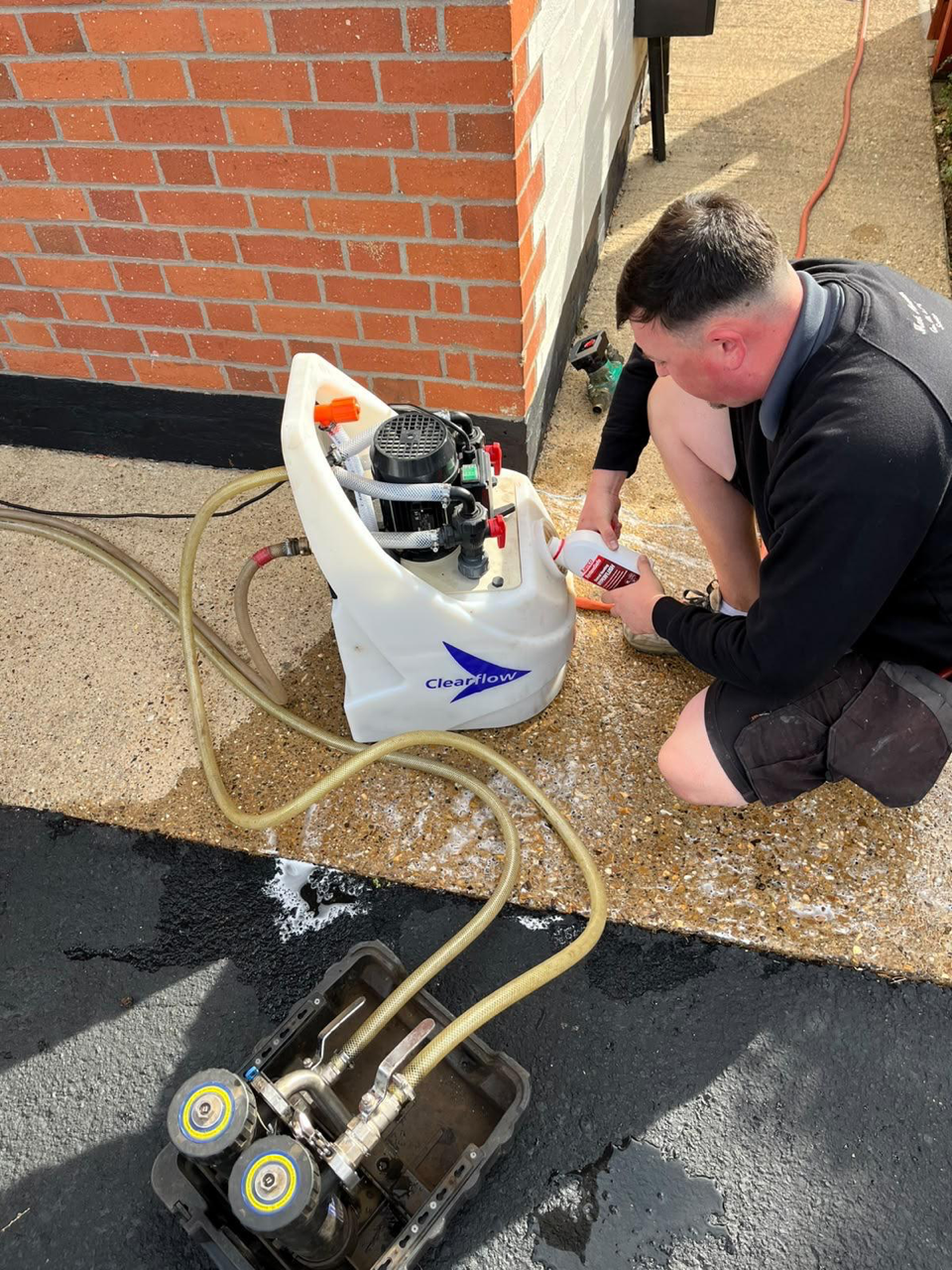
During our professional power flush, we connect a specialist machine to your heating system.
The machine pumps water through the system at a controlled high flow rate while specialised cleaning chemicals loosen and remove accumulated sludge, corrosion deposits and debris.
We clean each radiator individually to ensure the entire heating system is thoroughly flushed.
The dirty water is safely discharged before the system is refilled with clean water and treated with a fresh corrosion inhibitor.
What Happens During a Professional Power Flush?
Although every property is different, the process typically includes:
- Inspection of the heating system.
- Connection of specialist flushing equipment.
- Circulation of cleaning chemicals.
- Cleaning each radiator individually.
- Reversing water flow where required.
- Removing sludge and debris.
- Thoroughly rinsing the system.
- Refilling with clean water.
- Adding a corrosion inhibitor.
- Testing the heating system.
Depending on the size of the property and the condition of the system, the process can take several hours or, for larger systems, most of the day.
What Are the Benefits of a Power Flush?
Removing sludge offers several important advantages.
These include:
Hotter Radiators
Once sludge has been removed, hot water can circulate freely throughout each radiator, allowing it to heat evenly from top to bottom.
Lower Energy Bills
A clean heating system works more efficiently.
Radiators warm up more quickly and transfer heat into your home more effectively, meaning your boiler does not have to run for as long.
Improved Boiler Efficiency
When clean water circulates through the boiler, internal components are less likely to become restricted by debris.
This helps maintain efficiency and improve reliability.
Quieter Heating System
Many homeowners notice that banging, gurgling or kettling noises reduce significantly after a successful power flush.
Longer Boiler Life
A cleaner heating system places less stress on the boiler, helping to maximise its lifespan.
Reduced Risk of Breakdowns
Removing sludge reduces strain on:
- Pumps.
- Valves.
- Heat exchangers.
- Pipework.
This can help prevent expensive repairs.
Will Every Heating System Need a Power Flush?
Not necessarily.
Relatively new heating systems that have been correctly maintained may not require one.
However, we often recommend a power flush if:
- Radiators are cold at the bottom.
- A new boiler is being installed onto an older heating system.
- The heating system contains significant sludge.
- Dirty water is found during maintenance.
- Boiler manufacturers recommend cleaning before installation.
Our experienced engineers will assess whether a power flush is appropriate.
Can I Power Flush the System Myself?
Professional power flushing requires specialist equipment and experience.
Although chemical cleaning products are available for homeowners, they are generally not as effective as a professional power flush.
Incorrect use can also damage components or fail to remove the underlying sludge.
For heavily contaminated systems, we express that our professional flushing provides far better results.
At Mark Abraham Gas, we offer professional power flushing using specialist equipment to remove years of built-up sludge, corrosion and debris. Once the system has been thoroughly cleaned, we refill it with clean water, add a high-quality corrosion inhibitor and check that your heating system is operating efficiently.
Can Sludge Return?
Yes, but it can usually be prevented.
After a power flush, our outstanding engineers add a corrosion inhibitor.
This protective chemical slows the formation of rust inside the heating system.
Many modern heating systems are also fitted with a magnetic system filter.
These filters capture tiny metal particles before they circulate around the heating system and help keep the water cleaner for longer.
Combined with our positive annual boiler servicing, they significantly reduce the likelihood of future sludge problems.
What Else Could Cause a Cold Radiator?
Although sludge is the most common cause, other issues can also prevent radiators from heating properly.
These include:
- Sticking thermostatic radiator valves (TRVs).
- Faulty lockshield valves.
- Air trapped in the system.
- Circulation pump problems.
- Incorrect system balancing.
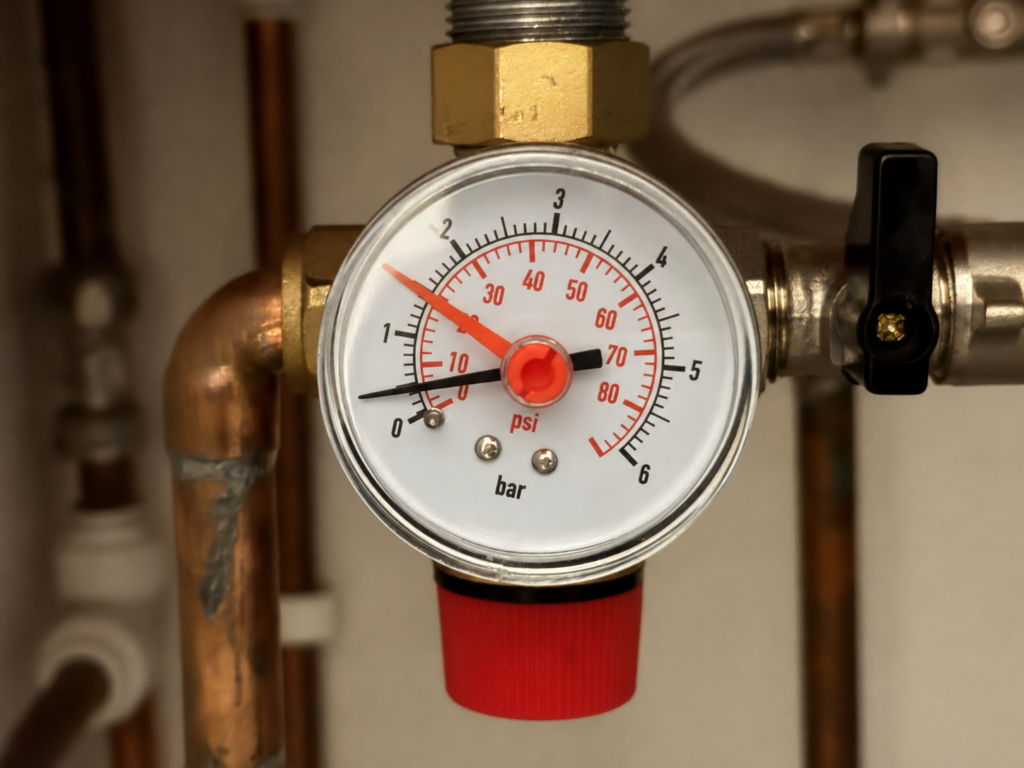
- Low boiler pressure.
- Faulty zone valves.
- Blocked pipework.
Our precise and thorough engineers can identify the exact cause.
Frequently Asked Questions
Is a cold radiator always caused by the boiler?
No. In most cases, the boiler is working correctly. The problem usually lies within the central heating system, particularly if sludge has built up inside the radiators.
Should I bleed a radiator that is cold at the bottom?
Not usually. Bleeding removes trapped air, which collects at the top of the radiator. If the bottom is cold while the top is warm, sludge is the more likely cause.
How long does a power flush take?
Most domestic systems can be power flushed within one working day, although larger or heavily contaminated systems may take longer.
How often should a heating system be power flushed?
There is no fixed schedule. Many systems never require one, while others benefit after many years of use or before a replacement boiler is installed. We expertly advise based on the condition of your system.
Can a power flush improve boiler efficiency?
Yes. By removing sludge and improving water circulation, a power flush can help your boiler operate more efficiently and reduce unnecessary strain on internal components.
Are your Radiators Cold at the Bottom?
Radiators that are cold at the bottom are usually a sign that your central heating system needs attention rather than an indication that your boiler has failed. In most cases, the problem is caused by a build-up of sludge inside the radiators, restricting the flow of hot water and reducing the efficiency of your heating system.
Whether your home is heated by a gas, LPG or oil boiler, the underlying causes are generally the same. Addressing the issue promptly can restore your radiators to full performance, improve your boiler’s efficiency, lower energy bills and help prevent unnecessary breakdowns.
If you’ve noticed radiators staying cold at the bottom or your heating system isn’t performing as it should, arranging an inspection by our qualified heating engineers at Mark Abraham Gas is the best way to identify the cause and restore warmth and comfort to your home.